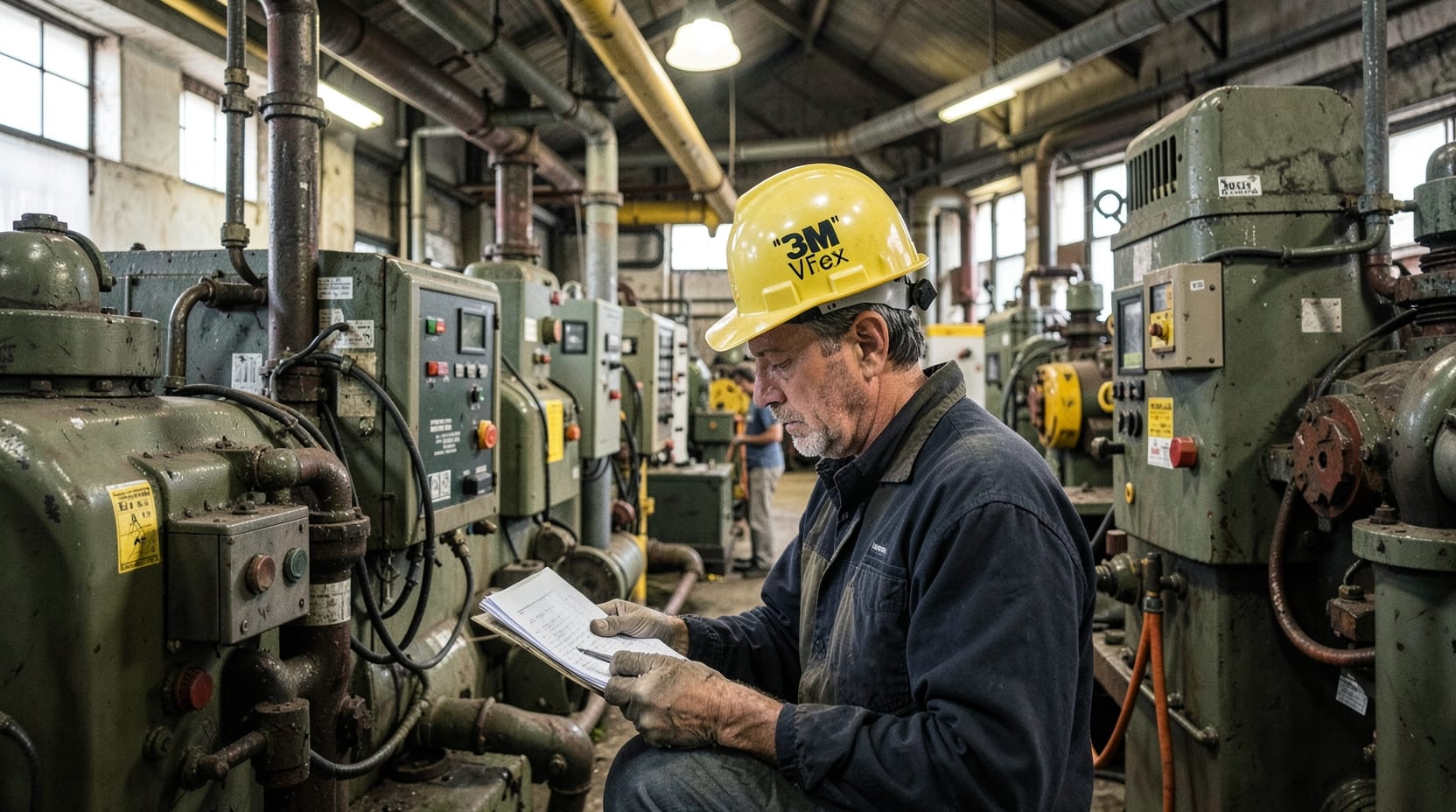
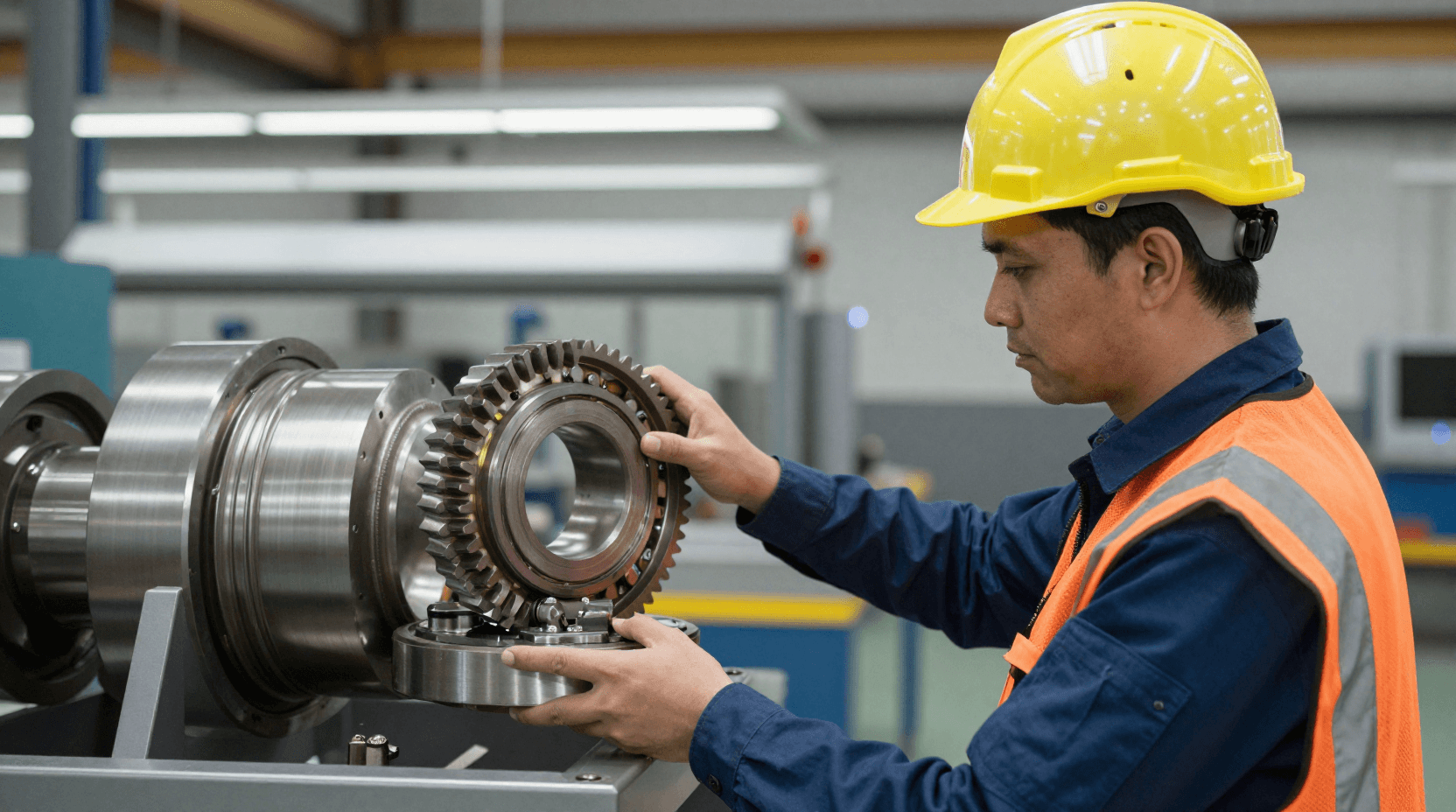
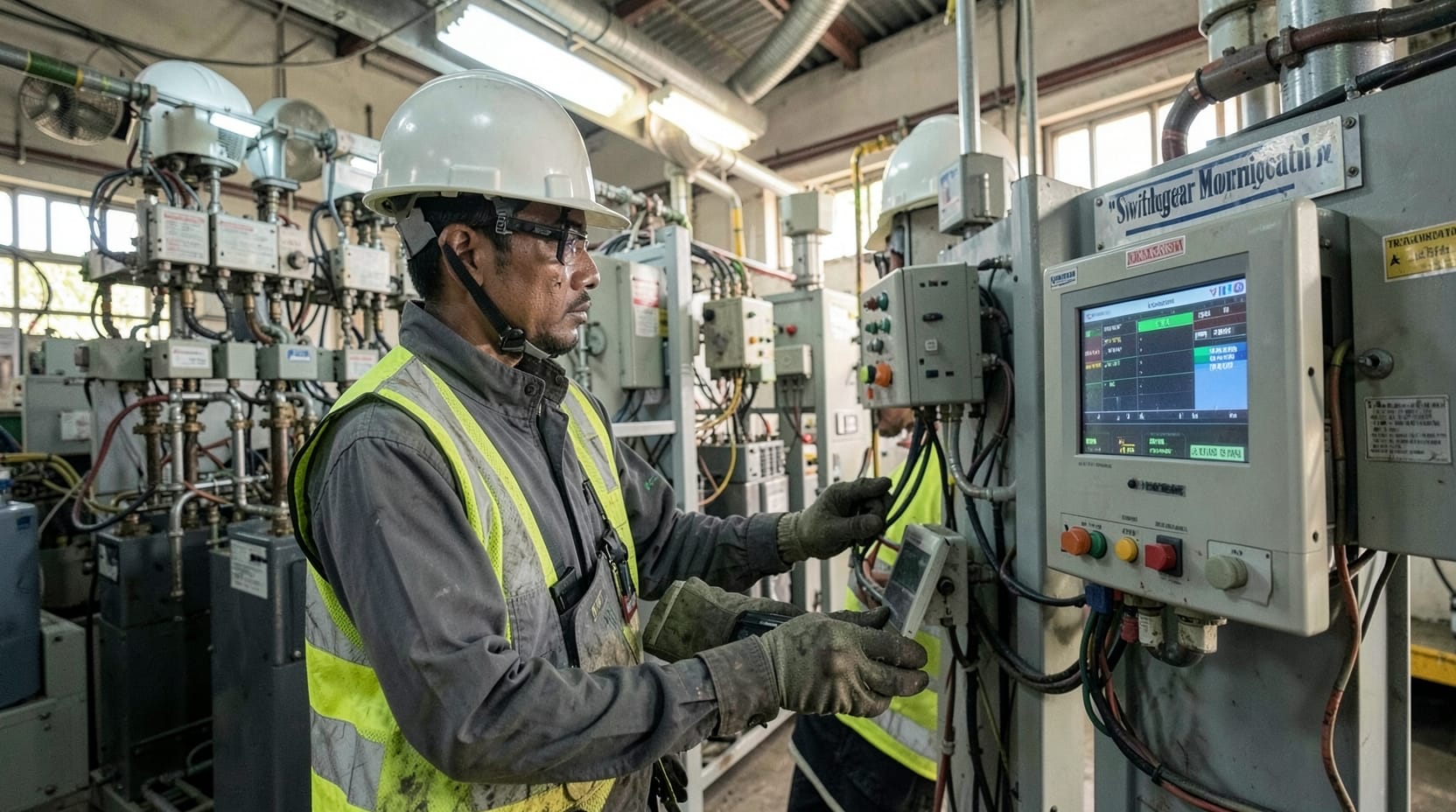
Predictive maintenance coaching is structured, on-the-job guidance that helps your own team turn condition monitoring data into correct diagnoses and timely repairs. Instead of outsourcing the analysis forever, an experienced coach works beside your analysts, engineers and planners until they can run the programme with confidence. It suits predictive maintenance Indonesia teams that already own instruments but still depend on outside analysts.
This article is for maintenance managers, reliability engineers and analysts in Indonesian plants who have instruments and trained staff but still depend on outside experts for every difficult call, and for organisations that want to build an in-house predictive maintenance team that keeps working when key people move on.
Key Takeaways
- Predictive maintenance coaching builds judgement on real machines, which a classroom course alone cannot do.
- Coaching should cover the whole chain: data collection, diagnosis, reporting, work orders and repair verification.
- Analysts, the reliability engineer and at least one planner all need to be part of the engagement.
- Clear exit criteria, such as independent sign-off on findings, prevent coaching from turning into permanent outsourcing.
- A blended model of site visits and remote data reviews suits plants spread across Indonesia.
- Progress is measured with a few simple indicators tracked from the first month.
Why Predictive Maintenance Coaching Matters
Most plants that struggle with condition monitoring do not lack instruments. They lack confidence. An analyst sees a rising peak in a spectrum, is not sure whether it is a bearing defect or a measurement artefact, and either waits too long or raises an alarm that operations learns to ignore. After a few false calls, findings lose credibility and the programme quietly shrinks.
Courses solve part of the problem. They explain how a fast Fourier transform turns a time waveform into a spectrum, which fault frequencies to look for, and how certification categories differ. What a course cannot do is sit with an analyst in front of data from their own compressor, at their own plant, and ask the questions an experienced diagnostician asks automatically. That is the gap predictive maintenance coaching fills.
There is also a continuity argument. Programmes built around one expert stall when that person is promoted or leaves. Predictive maintenance coaching spreads judgement across a team, documents how decisions are made, and leaves behind practices that survive staff changes.
There is also the question of cost over time. Outsourcing every diagnosis is reasonable for a small number of assets, but as a monitored fleet grows from dozens to hundreds of machines, the volume of routine analysis makes an in-house team the more practical option. Coaching is how that team reaches a dependable standard quickly, without years of learning by trial and error on critical equipment. The plant keeps outside specialists for the rare, difficult problems where their experience adds most value, and handles the everyday analysis itself.
Coaching Versus Training Versus Outsourcing for Predictive Maintenance Indonesia Teams
Plants usually choose between three ways of getting expertise into the programme. They are not exclusive; most mature programmes combine them. The table compares their typical strengths.
| Approach | What it delivers | Typical limitation | Best used for |
|---|---|---|---|
| Classroom training | Theory, terminology, certification | Little practice on the plant’s own machines | Building a common foundation |
| Outsourced service | Expert diagnosis and reports | Knowledge stays with the provider | Specialist or occasional tasks |
| Predictive maintenance coaching | Judgement and habits on real data | Needs internal staff time and commitment | Building a self-sufficient team |
A practical sequence is training first, then predictive maintenance coaching, with outsourced specialists kept for rare or very complex problems. For vibration, a foundation such as Basic Vibration Analysis followed by Advanced Vibration Analysis gives analysts the vocabulary that coaching then turns into practice. For lubricant work, Lubricant (Oil) Analysis for Predictive Maintenance plays the same role.
What a Predictive Maintenance Coaching Programme Covers
Good predictive maintenance coaching follows the full life of a finding, not just the diagnosis. Each stage has its own skills and its own typical mistakes.

Data collection discipline
The coach checks measurement point locations, sensor mounting, setup parameters and route compliance. Poor mounting alone can distort high-frequency data badly enough to hide early bearing defects. Getting this right is unglamorous but it decides whether everything that follows can be trusted.
Interval setting belongs here too. A route collected every 30 days suits slow-developing faults on robust machines, but may be too sparse for an asset whose faults move from first sign to failure in a couple of weeks. The coach helps the team match intervals to failure behaviour instead of copying one interval for every machine.
Diagnosis and severity
Analysts work through real cases: what the data shows, which faults are plausible, what extra measurements would confirm the diagnosis, and how severe the condition is. Severity judgement is the hardest skill to teach and the one where coaching pays most.
Reporting and recommendations
A correct diagnosis is useless if the report is unclear. The coach helps analysts write findings a planner can act on: asset, fault, confidence, recommended action and a realistic time window.
Work orders and verification
Coaching includes the planner and supervisor so that findings become prioritised work orders, and repairs are confirmed with a follow-up measurement before the finding is closed.
A Typical Predictive Maintenance Coaching Engagement
Every plant starts from a different point, so the plan should be agreed after a short review of current practice. A typical structure looks like this:
- Baseline review. Look at recent reports, routes, alarm settings and a sample of findings and failures to see where the team stands.
- Individual development plans. Agree for each analyst which skills to build first and what evidence will show they have it.
- Joint field work. Coach and analysts collect data together, correcting technique on the spot.
- Case reviews. Regular sessions, for example 2 hours every week, reviewing live cases and closed findings.
- Gradual hand-over. The internal team takes the lead on diagnoses while the coach reviews and challenges.
- Exit review. Check progress against the agreed criteria and decide what support, if any, is still needed.
Between site visits, remote reviews keep momentum. Analysts upload new data and draft findings, the coach comments within an agreed time, and the next visit focuses on the skills those reviews showed to be weakest. A common rhythm is one site visit every 4 weeks in the early phase, spaced further apart as the team becomes more independent.
The time scale depends on the starting point and on how much time the plant can release. A team that sees several faults a month learns faster than one where critical failures are rare, so case libraries from other machines are often used to fill the gaps.
Building a Case Library During Coaching
Real faults do not appear on schedule. A plant may run for 6 months without a significant bearing defect on a critical machine, and then see three in one week. Predictive maintenance coaching therefore works best when every confirmed case is captured in a simple case library that the team can study long after the event.
A useful case record is short and consistent. It holds the asset and its operating context, the data that first showed the problem, the diagnosis and the confidence level at the time, the recommendation, what was actually found when the machine was opened, and what the team would do differently. Photos of the removed parts are worth more than paragraphs of description.
Over time the library becomes the plant’s own reference. New analysts study it during induction, and experienced analysts use it to calibrate severity judgement. It also exposes patterns: for example, a group of pumps whose bearing defects keep appearing about 3 months after an overhaul points to an installation problem rather than a monitoring one.
The case library also helps with settings. Reviewing past cases shows whether the data was collected with a suitable frequency range and resolution. A route that captures spectra only up to 1 kHz, for instance, may have missed the early high-frequency signs that a wider range or an enveloping measurement would have shown. Adjusting setups based on evidence from your own machines is one of the most valuable habits predictive maintenance coaching can leave behind.
Finally, the library makes coaching sessions concrete. Instead of discussing theory, the coach and analysts open a closed case, compare the original call with what was found, and agree what the data was really saying. Mistakes become learning material rather than embarrassments.
Measuring Progress Without Guesswork
Predictive maintenance coaching should be judged on results, not on hours delivered. A handful of indicators tracked from the first month makes progress visible:
- Share of findings the internal team diagnoses correctly without help, reviewed by the coach.
- Route compliance, for example readings completed on schedule at 95% or better.
- Share of findings turned into work orders within their recommended window.
- Share of repairs verified with a follow-up reading, for example within 7 days of restart.
- Failures on monitored machines with no prior finding, each reviewed to learn why.
Certification gives a complementary, external measure. ISO 18436-2 defines four categories of vibration analyst competence, and many plants use it as a ladder: coaching helps analysts gain the practical experience that higher categories require. Courses such as ISO Vibration Course and Certification Category II fit naturally at that stage. Professional communities such as the Vibration Institute also publish material analysts can use between sessions.
Common Pitfalls in Predictive Maintenance Coaching
Coaching fails for predictable reasons. Most are about time and ownership rather than technical content.
- No protected time. Analysts are pulled into breakdown work, and sessions are cancelled week after week.
- Coach does the work. Under pressure, the coach writes the report instead of guiding the analyst, and learning stops.
- Planners left out. Diagnoses improve but findings still are not scheduled, so failures continue.
- No exit criteria. Without a defined end point, coaching becomes an open-ended dependency.
- Software access issues. Data held only by a contractor cannot be used for case reviews.
Each of these should be discussed openly before the engagement starts. The condition monitoring techniques themselves are well documented; the organisational habits around them are what predictive maintenance coaching actually changes.
Predictive Maintenance Coaching with TVP
PT Tiara Vibrasindo Pratama has worked in asset reliability since 1995. Its stated mission includes giving training, coaching and mentoring services supported by experienced and skilled engineers, alongside helping plants implement reliability management processes and use technology well. That combination of technology, business process and competency is what predictive maintenance coaching needs.
TVP’s project list includes Technical Assistant to Coach and Maturing SLS Predictive Maintenance at PT. Chevron Pacific Indonesia and Developing On-site Oil and Vibration Analysis Program at PT. ConocoPhillips Indonesia, both examples of building capability inside a client organisation. Classroom programmes run through the Tiara Competency Center, which gives plants a straightforward route from courses into on-the-job predictive maintenance coaching.
FAQ
How is predictive maintenance coaching different from a training course?
A course transfers knowledge in a classroom over a few days. Predictive maintenance coaching transfers judgement on the job over months: the coach reviews real data from your machines with your analysts, challenges their diagnoses, and helps them write findings that planners can act on. Most plants need both, with courses building the foundation and coaching turning that foundation into reliable daily practice.
Who in the plant should receive predictive maintenance coaching?
Start with the analysts who collect and interpret data, because their diagnoses drive every decision. Then include the reliability engineer who owns the programme and at least one planner, so that findings are understood and scheduled correctly. Supervisors benefit from short sessions on reading reports. Coaching only the analysts often produces better diagnoses that still sit unactioned.
How long does a coaching engagement usually last?
Long enough for the team to handle several complete cycles of detection, diagnosis, repair and verification on its own machines. That normally means months rather than weeks, with coaching intensity falling as competence grows. The engagement should end against agreed criteria, such as independent sign-off on findings, rather than on a fixed calendar date alone.
Can coaching be done remotely?
Partly. Data review, report critique and case discussions work well remotely when the plant can share measurement files or software access. Field skills such as sensor mounting, measurement point selection, route discipline and safe data collection still need time on site. A blended model, with periodic site visits and regular remote reviews, is usually the most practical choice for Indonesian plants spread across islands.
How do we know whether predictive maintenance coaching is working?
Track a few indicators from the start: the share of findings the internal team diagnoses correctly without help, the share of findings converted into work orders on time, repairs verified by a follow-up reading, and failures on monitored machines with no prior finding. If these move in the right direction while coaching hours fall, the team is genuinely building capability.
Conclusion
Instruments and certificates are only the starting point. Predictive maintenance coaching turns them into a team that collects reliable data, diagnoses with confidence, writes findings planners can act on, and verifies every repair. With protected time, clear exit criteria and a few honest indicators, a plant can move from depending on outside experts to running its own programme within a realistic time frame.
Talk to TVP. To discuss a coaching plan for your team, email info@tiaravib.com, call 021 5704200, or WhatsApp +62 821-1378-3727. Office: Jl. Penjernihan II No. 5A, Bendungan Hilir, Jakarta Pusat 10210.