Predictive maintenance training is the fastest way to make condition monitoring pay back, because sensors and software only find faults when the people reading the data know what a developing failure looks like. For plants in Indonesia, the useful path combines recognised certification levels with practice on the plant’s own machines, so that technicians move from collecting readings to making confident maintenance decisions. This guide sets out that path for predictive maintenance Indonesia teams.
This guide is written for maintenance managers, reliability engineers and plant leaders who need to decide who to train, in which technique, to what level and in what order. It also helps technicians who want to plan their own development from route collection to diagnosis. It explains how certification categories work, how to build a training roadmap around asset risk, and what to expect from a training provider such as PT Tiara Vibrasindo Pratama (TVP).
Key Takeaways
- People before tools: predictive maintenance training determines whether monitoring data becomes a correct decision or an ignored report.
- Four core techniques: vibration analysis, lubricant analysis, infrared thermography and electrical motor diagnostics cover most rotating and electrical failure modes.
- Certification gives structure: ISO 18436-2 defines vibration analyst categories, from data collection at Category I to advanced diagnosis at the higher levels.
- Train by risk: plan predictive maintenance training around the failure modes of your most critical assets, not according to which course is available next month.
- Practice after the course: coaching, report review and supervised diagnoses turn a certificate into real competence.
- Measure the result: track diagnostic accuracy, report quality and the number of findings acted on, not only the number of people certified.
Why Predictive Maintenance Training Matters More Than Equipment
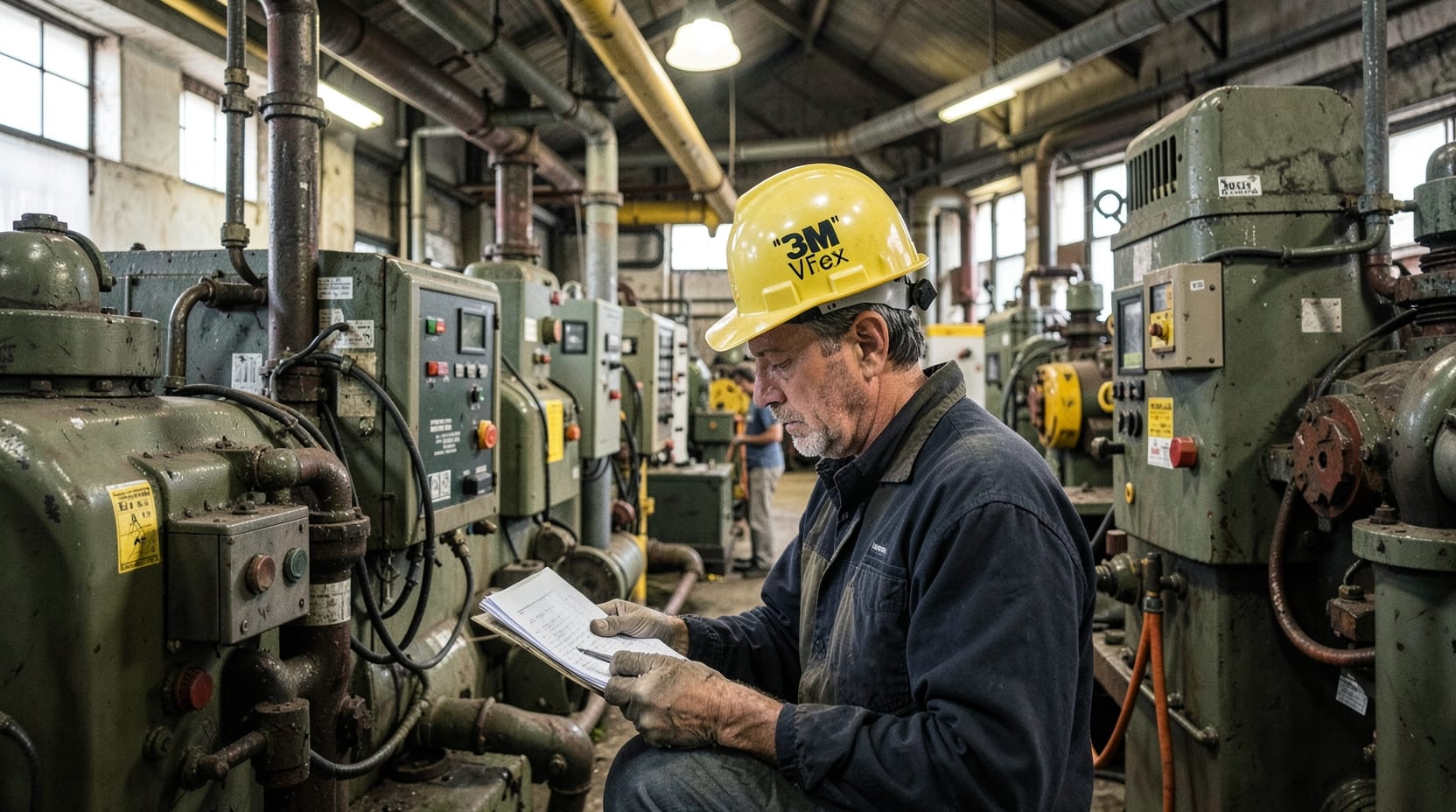
Many plants buy a data collector, a thermal camera or an online monitoring system before they decide who will interpret the results. The equipment arrives, a few routes are set up, and within a year the program has stalled. The readings are still being taken, yet nobody trusts the conclusions, alarms are acknowledged without action, and the maintenance team returns to fixed-interval work. The common root cause is not the hardware. It is the absence of structured predictive maintenance training.
Predictive maintenance depends on recognising patterns. A rise in vibration at one times running speed means something different from a rise at bearing defect frequencies. A hot spot on a motor terminal is not the same problem as a uniformly warm motor frame. An increase in iron particles in gearbox oil tells a different story when it is accompanied by rising viscosity. Each of these judgements is learned. Without training, technicians either miss early warnings or raise false alarms, and both outcomes erode confidence in the program.
The predictive maintenance approach also asks people to change how they think about time. Instead of replacing a bearing every 12 months, the team watches its condition and acts when the data says the bearing is degrading. That shift only works when planners, supervisors and managers believe the analyst. Predictive maintenance training builds that credibility, because it gives analysts a shared method, a shared vocabulary and evidence they can explain.
The Core Techniques a Predictive Maintenance Indonesia Team Needs
Most industrial plants rely on four techniques. Together they cover the majority of failure modes on rotating machinery and electrical equipment. A balanced predictive maintenance training plan gives every critical asset at least one technique that can detect its dominant failure mode early.
Vibration analysis
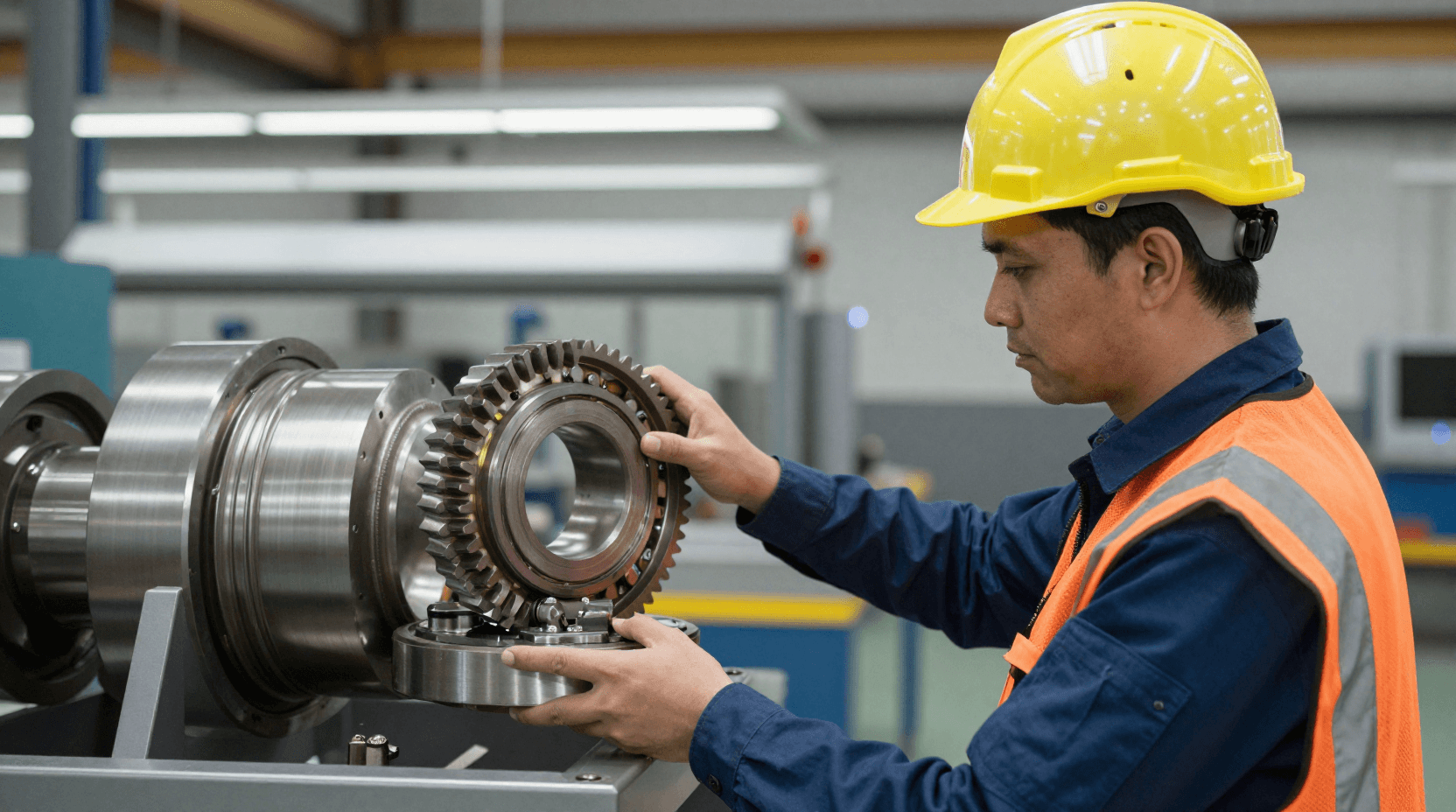
Vibration analysis detects unbalance, misalignment, looseness, bearing defects, gear problems and resonance. For general machinery running above 600 rpm, broadband velocity is commonly measured across roughly 10 Hz to 1,000 Hz, while bearing and gear defects often need higher frequency ranges and enveloping techniques. Predictive maintenance training in vibration progresses from collecting repeatable data, to reading spectra and time waveforms, to diagnosing complex faults and correcting them through balancing and alignment. Courses such as ISO Vibration Course and Certification Category I are the usual starting point.
Lubricant analysis
Oil is a carrier of information. Viscosity, contamination, wear metals and additive depletion reveal both the health of the lubricant and the health of the machine it protects. Particle counts are often reported as ISO 4406 cleanliness codes, which describe particles larger than 4 µm, 6 µm and 14 µm. Predictive maintenance training in this technique covers correct sampling, interpretation of laboratory reports and lubrication practices that prevent contamination in the first place. TVP lists a Machinery Lubricant Analysis Course and International Certification Level I for this path.
Infrared thermography
Thermography finds abnormal heat in electrical connections, motors, bearings, steam traps and refractory. The camera is easy to point; the skill lies in understanding emissivity, reflected temperature, load conditions and the difference between an absolute temperature and a temperature rise. A 10 °C rise above a similar component under the same load means more than a single high reading taken without context. The Infrared Thermography Certification Level I course covers these fundamentals.
Electrical motor diagnostics
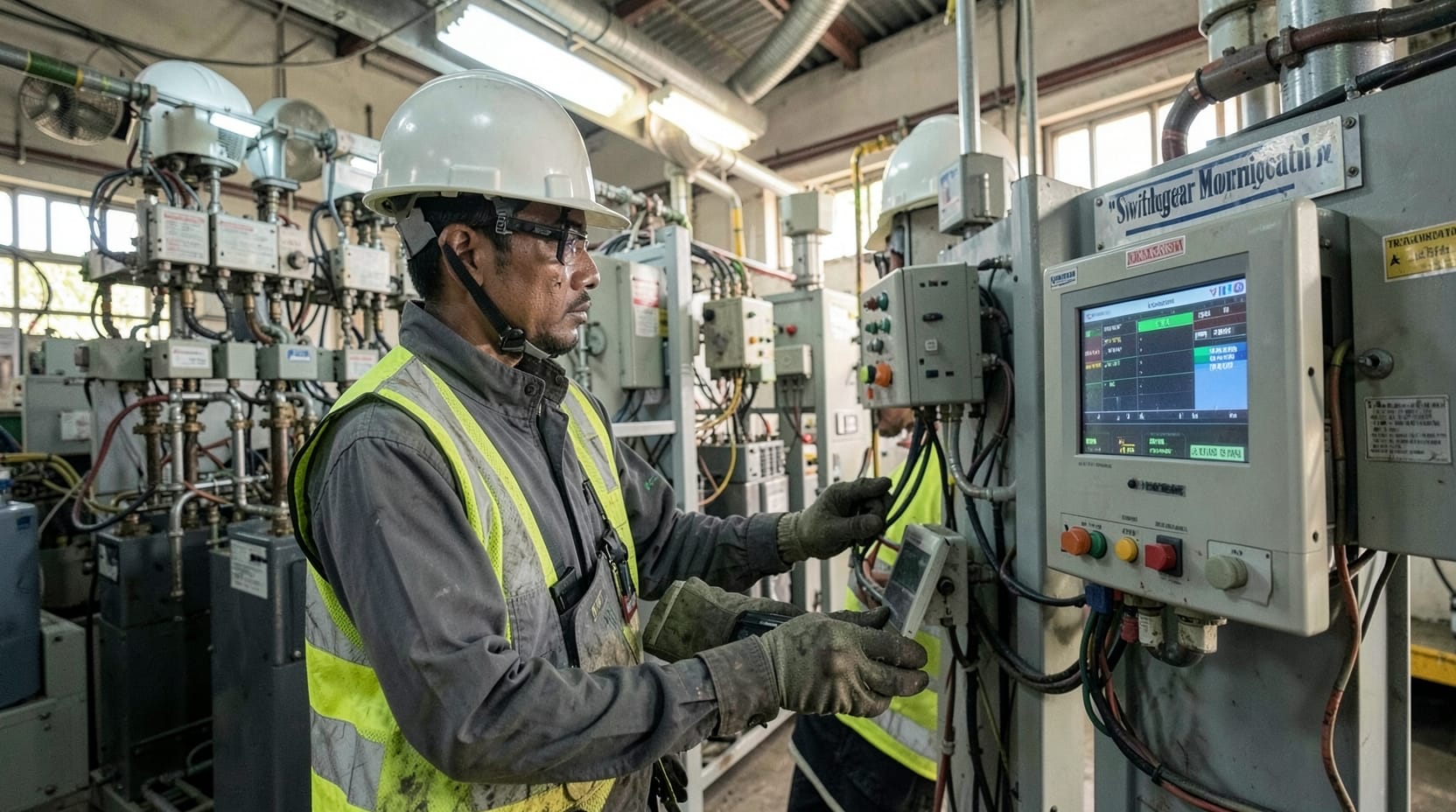
Motors drive most plant processes, and many of their failure modes are electrical rather than mechanical: broken rotor bars, stator winding deterioration, supply imbalance and insulation degradation. Motor current and electrical testing techniques complement vibration analysis and are covered in courses such as Diagnostic Faults in Electrical Motor.
Certification Levels and What They Mean
Certification gives predictive maintenance training a recognisable structure. The ISO 18436 series sets requirements for the qualification and assessment of condition monitoring personnel. Part 2 (ISO 18436-2) covers vibration condition monitoring and diagnostics and defines four categories of competence. Part 7 (ISO 18436-7) covers thermography. Lubricant analysis certification follows a similar tiered logic. The table below summarises what each vibration category typically means in daily work.

| Vibration category (ISO 18436-2) | Typical role | What the person can do |
|---|---|---|
| Category I | Route technician | Collect repeatable data on defined routes, check readings against alarms, report exceptions |
| Category II | Analyst | Interpret spectra and waveforms, diagnose common faults, recommend corrective actions, set up basic alarms |
| Category III | Senior analyst | Diagnose complex faults, use phase and transient data, direct programs and mentor other analysts |
| Category IV | Specialist | Apply advanced theory such as rotordynamics and modal analysis to unusual problems |
A certificate confirms that a person has met the training, experience and examination requirements at a given level. It does not confirm that the person knows your machines. That is why plants should treat certification as the floor of predictive maintenance training, not the ceiling, and continue developing people on their own assets after the course.
Building a Predictive Maintenance Training Roadmap
A roadmap keeps predictive maintenance training aligned with plant risk rather than with the course calendar. It also makes budgets easier to defend, because each course is linked to a specific group of assets and failure modes. A practical roadmap follows these steps:
- Rank critical assets. Identify the machines whose failure would stop production, threaten safety or cause expensive secondary damage.
- List dominant failure modes. For each critical asset, note what usually fails and how it can be detected early.
- Map techniques to failure modes. Decide which technique gives the earliest reliable warning for each failure mode.
- Assess current competence. Record who already has which skills, at which level, and who is responsible for each area of the plant.
- Close the gaps in priority order. Schedule courses for the techniques that protect the most critical assets first.
- Plan practice and review. After each course, assign real routes and diagnoses, and have experienced analysts review the results.
- Re-assess every year. Update the roadmap when assets, staff or failure history change.
For example, a plant with 400 monitored machines on a 30-day vibration route might decide that two route technicians need Category I, one engineer needs Category II, and the electrical team needs thermography Level I before the next shutdown. That decision is far easier to justify when it comes from a documented roadmap than from a list of courses chosen at random.
Reliability practitioner courses help managers and engineers build the roadmap itself. TVP’s Asset Reliability Practitioner I course is an example of training aimed at the people who design programs rather than the people who collect data.
From Classroom to Plant Floor: Making Training Stick
The most common disappointment with predictive maintenance training is that knowledge fades. A technician returns from a week-long course full of energy, but within three months the new skills are rarely used because routes, software and supervisors have not changed. Plants that get lasting value from training treat the course as the beginning of a development process.
Several practices make predictive maintenance training stick:
- Immediate application: assign trained people to real data within the first two weeks after the course.
- Report review: a senior analyst reviews diagnoses and recommendations and explains corrections.
- Case libraries: keep confirmed findings with spectra, thermal images and inspection photos so others can learn from them.
- Feedback from repairs: record what was actually found when a machine was opened, and compare it with the diagnosis.
- Protected time: give analysts scheduled time for analysis, not only for data collection.
Feedback from repairs deserves special attention. When a technician predicts an outer race bearing defect and the bearing is later found with exactly that damage, confidence grows on both sides. When the prediction is wrong, the team learns why. Without this loop, analysts never calibrate their judgement, and the organisation never learns how far it can trust the program.
Choosing a Predictive Maintenance Training Provider in Indonesia
Not every predictive maintenance training course delivers the same value. When comparing providers of predictive maintenance training in Indonesia, plant managers should look beyond the price and the certificate. The questions below help separate courses that build capability from courses that only tick a box.
- Is the course linked to a recognised certification structure? Alignment with ISO 18436 or an equivalent scheme makes levels comparable across companies.
- Do instructors have field experience? Instructors who have diagnosed real machines can answer the questions that textbooks do not.
- Is there hands-on work? Participants should handle instruments, collect data and analyse real cases, not only watch slides.
- Is the language right for the audience? Technical concepts land better when they are explained in the language participants use on the plant floor.
- What happens after the course? Ask whether coaching, mentoring or report review is available once participants return to work.
- Does the provider understand the whole program? Training is most effective when it fits a wider maintenance strategy rather than standing alone.
Independent professional bodies such as the Vibration Institute publish material on analyst certification and are a useful reference when you assess what each level should mean. The broader discipline of condition monitoring also gives context for how the techniques fit together.
TVP’s Approach to Predictive Maintenance Training
PT Tiara Vibrasindo Pratama has worked in asset reliability since 1995 and describes its offer as an integrated solution of Technology, Business Process and Competency. Competency is therefore one of the three pillars, not an add-on. TVP’s mission includes giving training, coaching and mentoring services supported by experienced engineers, and its catalogue is presented under Reliability Competency and the Tiara Competency Center (TCC).
The catalogue spans the core techniques described above: vibration analysis from basic to advanced levels, machinery lubricant analysis, infrared thermography, electrical motor diagnostics, balancing and operating deflection shape. It also includes reliability management courses such as reliability practitioner programs, RCM principles and work planning and control. This range lets a plant build one predictive maintenance training roadmap with one partner, from the route technician to the reliability engineer.
TVP is also supported by world-leading condition monitoring technology manufacturers and competency certification, and it maintains a network of maintenance experts from Indonesia, Singapore, the USA, South Africa, Australia and Europe. For plants, the practical benefit is that predictive maintenance training can be connected to the same technology and the same reliability practices used in the field.
FAQ
What does predictive maintenance training cover?
Good predictive maintenance training covers three layers: the physics of each failure mode, the measurement technique that detects it, and the decision that follows a finding. Vibration, lubricant analysis, infrared thermography and motor diagnostics are the usual core. Courses that skip the decision layer produce technicians who collect data well but cannot say what the plant should do next.
Which certification should a new vibration technician start with?
Most new technicians start with Category I under ISO 18436-2, which covers data collection, route work and recognising when a reading has crossed its alarm. Category II follows once the person has collected real field data for a period and needs to interpret spectra, diagnose common faults such as unbalance and misalignment, and write clear recommendations.
Is classroom training enough to run a PdM program?
No. Classroom predictive maintenance training gives people the vocabulary and the method, but competence comes from applying it on the plant’s own machines with feedback from someone more experienced. Structured coaching after the course, reviewed reports and supervised diagnoses matter as much as the certificate itself, and they are what turns a trained person into a trusted analyst.
How should a plant choose which people to train first?
Start with the assets that carry the most risk and the people who already look after them. A mechanical technician on the critical compressor route gains more from vibration training than a planner, while an electrical technician responsible for motor control centres benefits first from thermography and motor diagnostics. Match each technique to the failure modes that cost the plant most.
Where does TVP deliver predictive maintenance training?
TVP presents its predictive maintenance training under Reliability Competency and the Tiara Competency Center (TCC). The catalogue covers vibration analysis at several levels, machinery lubricant analysis, infrared thermography, electrical motor diagnostics, operating deflection shape and reliability practitioner courses. Contact TVP to discuss which course fits your team, your assets and your schedule.
Conclusion
Predictive maintenance training is what turns monitoring equipment into reliable decisions. Plants that rank their critical assets, map failure modes to techniques, train people to recognised levels and then coach them on real machines build programs that last. Plants that buy tools first and train later usually end up with data nobody trusts. A clear roadmap, applied practice and feedback from every repair keep the investment working long after the course ends.
Talk to TVP. To plan predictive maintenance training for your team, email info@tiaravib.com, call 021 5704200, or WhatsApp +62 821-1378-3727. Office: Jl. Penjernihan II No. 5A, Bendungan Hilir, Jakarta Pusat 10210.