Asset Aging Management in Asset Reliability Management
Direct answer (AEO): Asset aging management is the discipline of assessing how much useful life remains in each asset, understanding how its condition and risk change as it ages, and deciding deliberately whether to continue, extend, refurbish, or replace it. Inside asset reliability management it answers the question that mature plants cannot avoid: the equipment was designed for a service life, that life is being consumed, and the replacement decisions cannot all be deferred forever. Aging management replaces the default strategy of running to failure and reacting with a planned, evidence-based programme that protects safety, availability, and capital efficiency at the same time.
Need asset aging assessment support in Indonesia? Contact Tiaravib — email info@tiaravib.com or WhatsApp +62 821-1378-3727.
At a Glance
- What it is: a structured assessment of remaining life, condition trend, and obsolescence exposure across a plant’s asset base, used to plan refurbishment, replacement, and life extension decisions.
- Why it matters: aging is not linear. Older assets show rising failure rates, rising repair cost, falling spare availability, and growing regulatory exposure all at once.
- Core inputs: condition monitoring history, inspection findings, failure records, spares availability, and the remaining design life of major components.
- Principal outputs: a remaining-life view per asset, a ranked replacement exposure list, and a multi-year capital plan tied to actual condition rather than to calendar age.
- Central trap: deferring replacement is not free. The cost of deferral is the accumulating risk of an unplanned failure at the worst possible time.
Why Aging Assets Demand a Deliberate Strategy
Every Indonesian process plant of a certain age is running the same quiet experiment. The equipment installed during the original construction was specified for a design life, and that design life is being consumed year by year against a duty that has often grown more demanding than the original basis. The plant still produces. The leading indicators of decline appear slowly enough that each individual signal can be explained away, and they compound.
The reason aging cannot be managed reactively is that the failure mode itself changes. A new asset fails from defects and installation errors, which are largely contained by warranty and commissioning discipline. A mid-life asset fails from random wear-out, which condition monitoring handles well. An aged asset begins to fail from mechanisms that monitoring does not reliably catch: corrosion under insulation, fatigue in components that have accumulated cycles for decades, electrical insulation that has absorbed moisture and thermal aging, instrumentation and control components that are no longer manufactured, and weld and structural degradation that progresses faster than periodic inspection intervals can track.
Aging also changes the economics in ways that are easy to miss. Repair cost per event rises because parts must be fabricated or reverse-engineered once the original supplier has discontinued the line. Lead times extend, so the same failure that would once have cost two days now costs six weeks. Specialist skills for the old technology become scarce, so the response to an outage depends on retaining an engineer whose knowledge is approaching retirement age along with the machine.
For a plant in this position, asset reliability management is no longer only about monitoring condition and eliminating defects. It becomes a capital allocation problem, and the discipline that resolves it is asset aging management: a continuous, documented assessment of remaining life that converts vague concern about old equipment into specific, prioritised, fundable decisions.
The Mechanisms of Aging and How Each Is Detected
Aging is not a single phenomenon, and treating it as one produces generic advice that helps nobody. Four distinct mechanisms drive most age-related loss of reliability, and each has its own detection method and its own position on the replacement timeline.
Physical wear and degradation. Progressive material loss or property change — wall thinning, insulation aging, bearing raceway fatigue, seal degradation, refractory loss. Detected by condition monitoring, non-destructive examination, and physical inspection, and quantified through remaining-life calculations where the degradation rate is measurable.
Fatigue and cycle accumulation. Unlike wear, fatigue damage accumulates without visible warning and is driven by load cycles rather than operating hours. Pressure vessels, piping subject to thermal cycling, rotating components subject to vibration, and structures under variable load all accumulate fatigue damage. Detected by cycle counting, stress analysis, and targeted inspection of known high-stress locations.
Obsolescence. The asset remains sound but cannot be maintained because parts, software, or support have disappeared. Control systems, protection relays, and instrumentation are the classic cases. Detected by a spare parts and vendor support review rather than by condition monitoring, and often the most urgent aging exposure because it constrains the response to other failures.
Design-basis drift. The asset is unchanged but the duty has changed — higher throughput, more aggressive chemistry, more frequent start-stop cycles, or tighter regulatory limits. The asset is not aging faster; it is being asked to do more. Detected by comparing current operating data against the original design basis.
Building a Remaining-Life Assessment
The practical core of aging management is a defensible estimate of how much useful life remains, expressed in a form that supports a replacement decision. There is no single method; the appropriate approach depends on the asset class.
Condition-based assessment
Where degradation is measurable and its rate is known, remaining life can be extrapolated. Wall thickness trending on piping and vessels, insulation power factor and dissipation factor trending on electrical equipment, and wear metal trending on lubricated components all support a projection to a defined limit. The output is an estimate in operating hours or years, with the confidence band stated, and it should be refreshed at every inspection rather than produced once.
Statistical and failure-data assessment
For populations of similar assets, failure history can be used to estimate age-related failure probability. The value here is population-level: a fleet of identical motors in similar service produces a pattern that individual asset condition assessment cannot. The limitation must be respected — statistical life estimates say nothing about the specific unit that is already showing an anomalous trend, and condition evidence always overrides a population average.
Engineering and fitness-for-service assessment
For static equipment, fitness-for-service and remaining-life assessment against recognised codes provides the most defensible basis for continued operation. This is where the answer to “can we run this vessel for another ten years” is produced with calculations rather than opinion, and where the conditions and inspection intervals required to support that conclusion are defined.
Obsolescence and supportability review
Operating condition is irrelevant if the asset cannot be repaired. The review should record, for each significant asset, whether spare parts are still available, whether the vendor still supports the product, whether the firmware or software is still maintained, and how long the plant could tolerate an outage awaiting a replacement. Assets with no viable support path belong on the replacement exposure list regardless of how well they are currently running.
Deferral Risk: The Cost of Waiting
The single most common failure of aging management is treating replacement deferral as a saving. Deferral moves cost off this year’s budget and converts it into risk that is not recorded anywhere. Making that risk visible is the central contribution of the discipline.
| Deferral effect | What actually happens | How to quantify it |
|---|---|---|
| Rising failure probability | Failure rate climbs as the asset moves further into its wear-out region | Condition trend extrapolation or population failure statistics, expressed as probability per year |
| Rising failure consequence | Secondary damage grows, and collateral damage to adjacent equipment becomes likely | Estimate repair scope if the failure is not caught early, not the cost of a contained repair |
| Spares unavailability | Emergency sourcing replaces planned procurement; lead time and unit price both rise | Obsolescence review with quoted lead times for non-standard parts |
| Reduced operational flexibility | The aged unit cannot be pushed, so production planning works around it | Lost throughput and lost margin per year from constrained operation |
| Regulatory and safety exposure | Inspection findings escalate and the operator carries increasing compliance risk | Documented inspection findings and the cost of any imposed operating restriction |
| Capital cost escalation | Replacement is deferred into a year with higher prices, longer lead times, or a full shutdown window that no longer exists | Multi-year price and lead-time trajectory for the replacement scope |
Presented this way, the deferral decision becomes explicit. Extending an asset’s life is a perfectly rational choice when the risk is quantified and accepted, and when the inspection regime that supports the extension is actually in place. It becomes an irresponsible choice when the extension is an unrecorded default and the supporting inspection is not genuinely being performed.
Life Extension: Making It Defensible
Life extension is not simply running the asset longer. It is a documented technical case that the asset can continue to operate safely and reliably beyond its original design life, supported by evidence, with the conditions of continued operation defined.
A defensible extension case typically contains: a condition assessment establishing current integrity; a remaining-life calculation against the relevant limit; identification of the specific degradation mechanisms that could cause failure during the extension period; an inspection and monitoring regime designed to detect each of those mechanisms at a stage where action is still possible; a spares and supportability assessment; and a re-assessment trigger — a date, an operating-hours threshold, or a condition level at which the extension case must be reopened.
The re-assessment trigger is the element most often omitted and the one that matters most. A life extension granted without a defined re-assessment point becomes a permanent assumption, and the asset drifts past the basis on which the extension was justified. Equally important is registered documentation: an extension decision that exists only in a reliability engineer’s report has no regulatory standing and will not survive that engineer’s departure.
Integrating Aging Management into the Reliability Programme
Aging management does not sit outside the reliability function; it is the long-range planning layer of it. The integration points are concrete.
Criticality ranking sets the priority. An aging asset that is also critical accounts for both the probability of failure and the consequence of it. Equipment criticality ranking therefore multiplies the value of the aging assessment by directing scrutiny to the assets where age-related failure would hurt most.
Bad actor analysis supplies the evidence. Rising failure frequency on an aged asset is a data signal, and the bad actor analysis register is often where age-related degradation first becomes visible as a trend rather than an anecdote.
Condition monitoring supplies the trend. Aging management depends on degradation-rate data, and condition monitoring is the mechanism that produces it. An aged asset with no condition history cannot have its remaining life estimated, which means the monitoring programme is a prerequisite for life extension rather than an optional extra.
The asset register supplies the population. You cannot assess the age profile of a plant whose equipment register is incomplete. Age, installation date, and design life are basic register fields, and they are frequently missing. Building and maintaining these fields is a foundational step, and it is the reason aging management programmes typically begin with register rehabilitation.
The capital plan is the output. Aging assessments that do not connect to the capital planning cycle produce reports rather than decisions. Each significant asset should carry a remaining-life estimate and a replacement trigger that feeds directly into the multi-year capital plan, so that replacement is budgeted in the right year rather than funded reactively after a failure.
How Tiaravib Supports Aging Management
Tiaravib has worked with Indonesian process, power, and manufacturing operators since 1995, and a large share of that work has been on equipment that is already well into its service life. We approach asset aging management as an evidence problem rather than a prediction problem: the goal is not a precise remaining-life number, it is a decision that can be defended with the evidence available.
We typically begin with the asset register, reconciling age, duty, and design-life fields and identifying the population that genuinely warrants assessment. We then bring existing condition monitoring history, inspection findings, and failure records together into a remaining-life view, using fitness-for-service assessment and degradation trending where the data supports quantification, and a structured engineering judgment where it does not — with the basis of each estimate recorded. An obsolescence and supportability review runs in parallel, because supportability frequently sets the real replacement deadline regardless of physical condition.
The deliverable is a ranked replacement exposure list with a multi-year capital profile, a life extension case for each asset the client intends to continue operating, and the re-assessment triggers that keep those cases valid. The work connects naturally to equipment asset register development and to planning and scheduling so that refurbishment and replacement work is integrated into shutdown planning instead of arriving as an emergency.
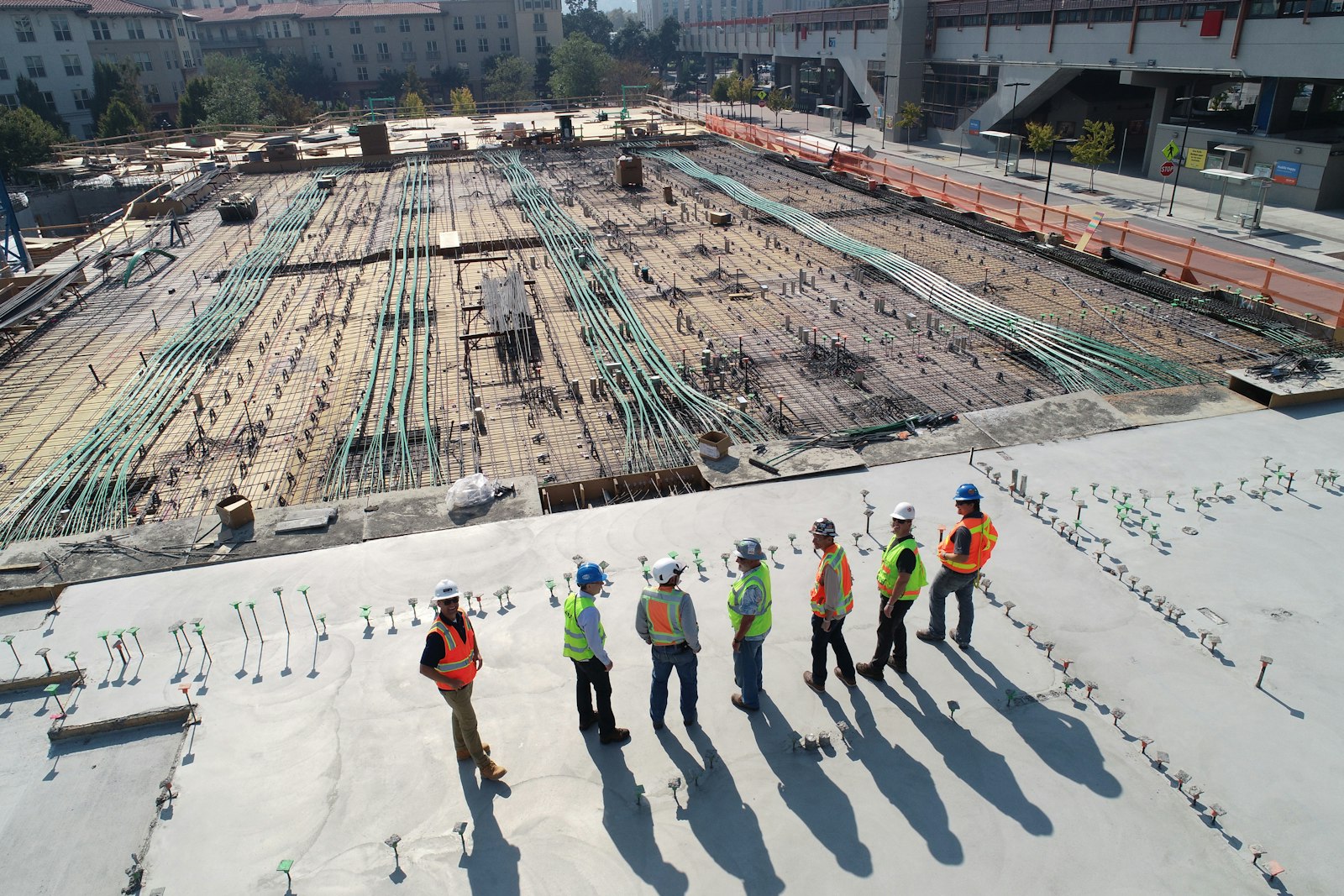
Practitioner reporting in Plant Engineering documents how operating plants sequence life extension, refurbishment, and replacement decisions across an aging asset base.
Key Takeaways
- Aging changes the failure mode. Older assets fail from corrosion, fatigue, insulation degradation, and obsolescence — mechanisms that periodic monitoring catches less reliably than the wear-out of mid-life equipment.
- Four mechanisms need four detection methods. Physical wear, fatigue accumulation, obsolescence, and design-basis drift each require their own assessment approach.
- Deferral is not a saving. It converts budget relief this year into unrecorded risk, longer lead times, higher unit prices, and constrained operation.
- Life extension must be documented and registered. An extension without a written case and a defined re-assessment trigger becomes a permanent assumption nobody has justified.
- Supportability can set the deadline. An asset with no spare parts path must be replaced regardless of how well it currently runs.
- Connect the assessment to the capital plan. Remaining-life estimates that do not feed the multi-year budget produce reports rather than replacements.
Frequently Asked Questions
At what age should we start an asset aging management programme?
Start before the equipment reaches the point where aging dominates the failure profile, which for most process equipment is somewhere between half and two-thirds of design life. Beginning early has a practical advantage: the condition history needed to extrapolate remaining life has to be accumulated over years, so a plant that starts monitoring only when the asset is already old has permanently lost the baseline. Plants with a mixed-age asset base often begin immediately with the oldest critical equipment while building monitoring coverage on the rest.
How accurate can a remaining useful life estimate realistically be?
Accuracy varies enormously by mechanism and by asset class. Degradation with a measurable rate and a well-defined limit, such as wall thinning against a minimum thickness, can be projected with reasonably tight confidence. Fatigue life estimates on components with uncertain load history carry wide bands. Obsolescence has no physical estimate at all and is a judgement based on vendor and market intelligence. The honest approach is to state the confidence band and the basis with every estimate, and to treat the estimate as an input to a decision rather than as a fact.
Is it cheaper to extend life or to replace the asset?
There is no general answer, but the comparison is frequently made incorrectly. Life extension is normally cheaper on paper because it counts only the inspection and refurbishment it requires, while replacement is charged with the full capital cost. The fair comparison must add to the extension case the expected cost of the failures that will occur during the extension period, the cost of the additional monitoring, and any lost production from constrained operation. Once those are included, extension usually still wins for sound assets in the middle of their life, and replacement usually wins once supportability or escalation in consequence becomes the dominant factor.
How does obsolescence differ from physical aging?
Physical aging is the asset losing condition; obsolescence is the plant losing the ability to maintain the asset, even when the asset itself is still in acceptable condition. A control system with discontinued hardware, an instrument with no available spare, or a machine whose specialist repair knowledge has retired are all obsolete regardless of how well they are currently performing. Obsolescence often sets a harder deadline than condition, because condition can be monitored and managed while a supportability gap cannot be overcome by any amount of inspection.
What documentation is required to justify a life extension?
A defensible extension case documents the current condition assessment, the remaining-life calculation against the relevant limit, the specific degradation mechanisms that could cause failure during the extension period, the inspection and monitoring regime designed to detect each of them, the spares and supportability position, and the re-assessment trigger that will reopen the case. It should be registered as a controlled document with a named owner. Informal extension decisions, however technically sound, do not survive staff changes and do not carry any weight in a regulatory review.
Can aging management be done without a complete asset register?
Only for a defined subset. You can assess the assets you have identified, and doing so often delivers value quickly on the small number of large, old, critical units that dominate the replacement exposure. But the purpose of an aging programme is to see the whole plant’s replacement obligation across multiple years, and that requires knowing the population, its ages, and its design lives. Register rehabilitation is therefore usually the first workstream, and plants that skip it tend to produce a replacement plan that later proves to have omitted significant assets.
External references: ISO 55001 asset management standard and the U.S. Department of Energy.
For a site assessment or pilot proposal, contact Tiaravib via WhatsApp +62 821-1378-3727 or info@tiaravib.com.