Need a reliability partner in Indonesia? Contact Tiaravib — email info@tiaravib.com or WhatsApp +6282113783727.
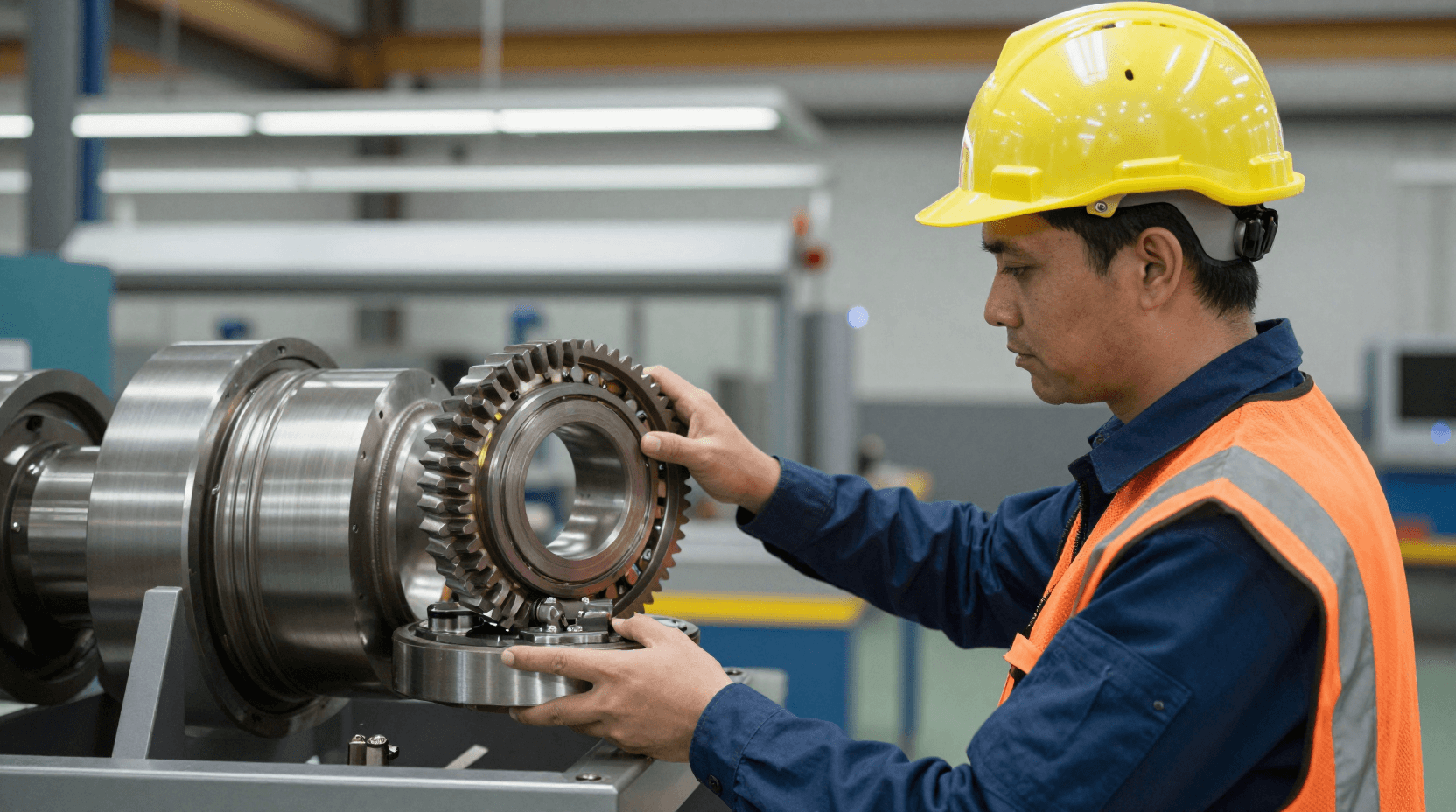
Gearbox condition monitoring is one of the most technically demanding applications in industrial reliability. Gearboxes are critical power transmission components in Indonesian mining, cement, paper, and power industries — and when they fail catastrophically, the consequences include extended downtime, expensive repairs, and in some cases, complete equipment replacement. Advanced condition monitoring techniques can detect developing gearbox faults weeks or months before catastrophic failure, providing the time needed for planned maintenance intervention.
Gearboxes in Indonesian Industry: Applications and Stakes
Heavy gearboxes are found throughout Indonesian industry. In open-pit coal and nickel mining, large mill drive gearboxes and conveyor drive gearboxes transmit thousands of kilowatts to grinding and conveying systems. In cement plants, vertical roller mill main gearboxes and kiln drive gearboxes are among the most critical single assets in the plant. In pulp and paper mills, gearboxes drive refiners, roll presses, and winders. Power plants use large gearboxes in cooling tower fans, boiler feed pump drives, and auxiliary systems. In all of these applications, a gearbox failure means production stops.
What makes gearbox failures particularly costly is that they are rarely clean. A catastrophic gear tooth fracture or bearing failure often produces secondary damage: broken gear teeth damage adjacent gear sets, failed bearings score shaft journals, and debris circulating in the oil system can contaminate and destroy an entire gearbox in minutes. The difference between catching a fault early — when it can be managed with a planned bearing replacement — and allowing it to progress to catastrophic failure can be the difference between a one-week planned outage and a three-month forced outage waiting for replacement gears to be manufactured and shipped.
Gearbox Failure Modes
Gear Tooth Fatigue and Surface Distress
Pitting is the most common gear surface failure mode — fatigue-driven micro-cracking that removes small particles of material from the tooth flanks, leaving characteristic pits. As pitting progresses to spalling (larger area material removal), it generates increasing vibration and wear debris. If undetected, spalling leads to tooth fracture. Sub-surface fatigue cracking leading to tooth fracture can develop more rapidly than surface pitting and is particularly dangerous because the tooth appears visually normal until fracture.
Bearing Failures
Gearbox bearing failures account for approximately 40% of gearbox failures. The high radial and axial loads on gearbox bearings, combined with the challenging lubrication environment inside a gearbox (foam, debris, temperature variations), create demanding conditions for rolling element bearings. Early bearing defects generate characteristic high-frequency vibration signatures that are detectable with proper analysis techniques long before they affect gear mesh or cause secondary damage.
Lubrication Failures
Inadequate lubrication — from oil system failure, contamination, incorrect viscosity, or degraded oil — is a root cause of both gear surface distress and bearing failures. For large gearboxes with pressurized oil systems, continuous monitoring of oil pressure, temperature, and filter differential provides early warning of lubrication system problems before they cause machine damage.
Shaft Misalignment
Misalignment between the gearbox input and output shafts and their connected machinery creates additional loads on gear meshes and bearings, accelerating wear. Thermal growth during startup, foundation settling, and improper alignment during reassembly are common causes of misalignment in industrial gearboxes.

Vibration Analysis Techniques for Gearboxes
Gear Mesh Frequency Analysis
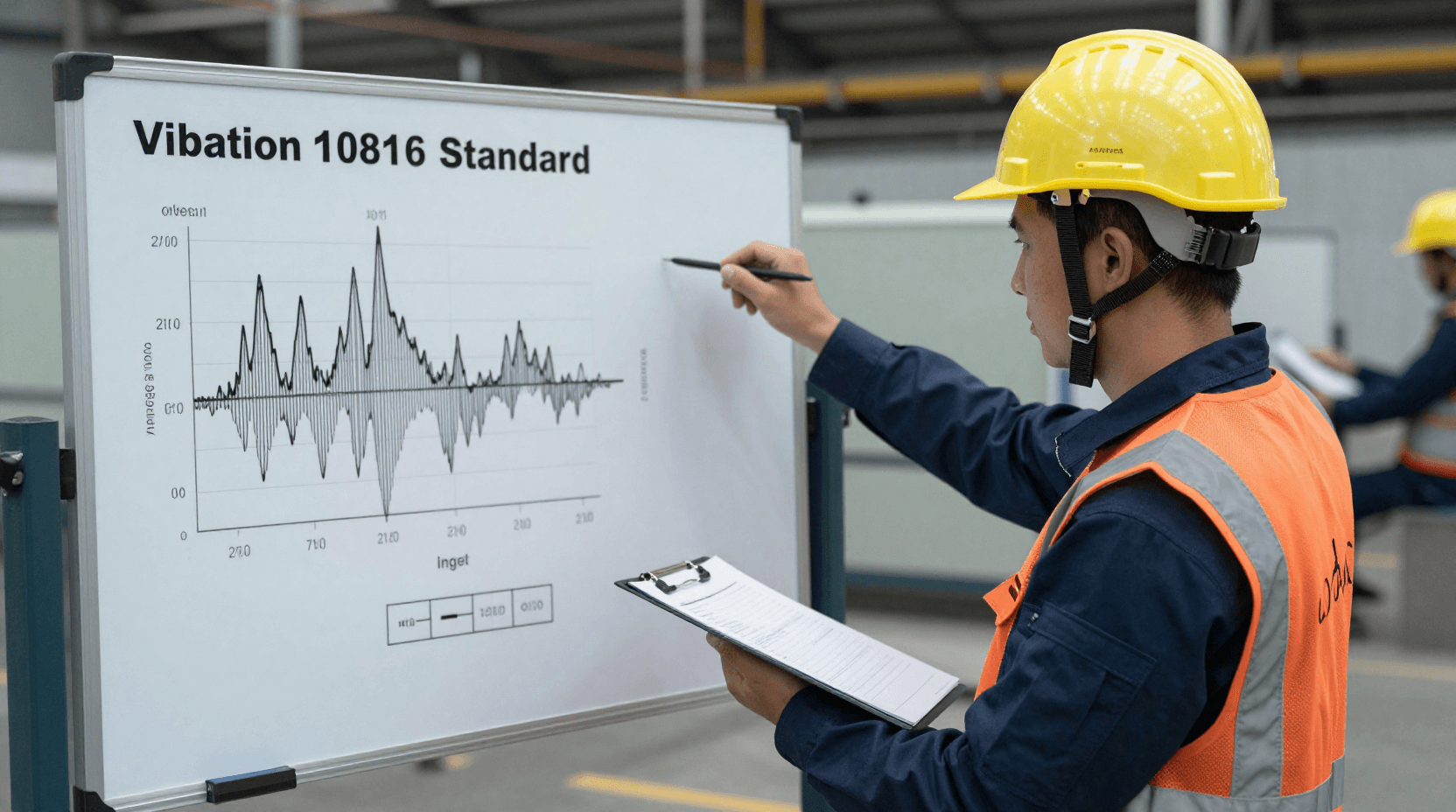
Every gear pair generates vibration at the Gear Mesh Frequency (GMF) — the product of shaft speed and number of teeth. In a healthy gearbox, GMF amplitude is relatively constant and the frequency spectrum is clean. Developing gear faults generate sidebands around the GMF — equally spaced frequency components at multiples of the shaft speed. Increasing sideband amplitude and the appearance of additional harmonic families are reliable indicators of gear deterioration.
Cepstrum Analysis
Cepstrum analysis — the inverse Fourier transform of the log spectrum — is particularly powerful for gearbox diagnostics because it emphasizes periodic patterns (such as sidebands) and can separate the contributions of different gear pairs even in complex multi-stage gearboxes. A skilled analyst using cepstrum analysis can identify which specific gear pair or bearing is generating anomalous signals.
High-Frequency Envelope Analysis for Bearings
Rolling element bearings inside gearboxes generate high-frequency impulsive signals when defects on the inner race, outer race, or rolling elements impact mating surfaces. Envelope analysis — demodulating the high-frequency acceleration signal to extract the modulation frequency — reveals bearing defect frequencies (BPFO, BPFI, BSF, FTF) that confirm the presence and location of bearing defects. Tiaravib’s vibration analysts apply these advanced techniques to gearbox diagnostics across Indonesian industry.
Oil Analysis for Gearboxes
Oil analysis provides a complementary and sometimes earlier indication of gearbox deterioration than vibration analysis. Wear particle analysis detects metallic debris generated by gear surfaces and bearings. Particle morphology — the shape, size, and composition of wear particles — provides diagnostic information about the type and severity of wear occurring. Ferrographic analysis of large particles can identify fatigue-generated particles characteristic of gear tooth spalling before the fault is detectable in vibration.
Regular oil sampling — monthly for critical gearboxes, quarterly for semi-critical — combined with consistent laboratory analysis provides a trend history that reveals gradual deterioration. A sudden increase in wear metal concentration or a change in particle morphology triggers more frequent sampling and vibration diagnostics.
Thermography for Gearboxes
Infrared thermography detects abnormal heat generation in gearbox housings caused by bearing friction, inadequate lubrication, or gear mesh problems. Thermographic surveys of gearboxes during normal operation provide a baseline; deviations from baseline indicate developing problems. Thermography is particularly effective for detecting lubrication-related issues and for quick overall health checks during plant walkdowns.

Tiaravib’s Gearbox Condition Monitoring Services
Tiaravib provides comprehensive gearbox condition monitoring services for critical industrial gearboxes across Indonesian industries. Our ISO 18436-2 certified vibration analysts apply gear mesh frequency analysis, cepstrum analysis, and envelope analysis to detect developing gear and bearing faults at the earliest possible stage. We combine vibration diagnostics with oil analysis interpretation to provide a complete picture of gearbox health.
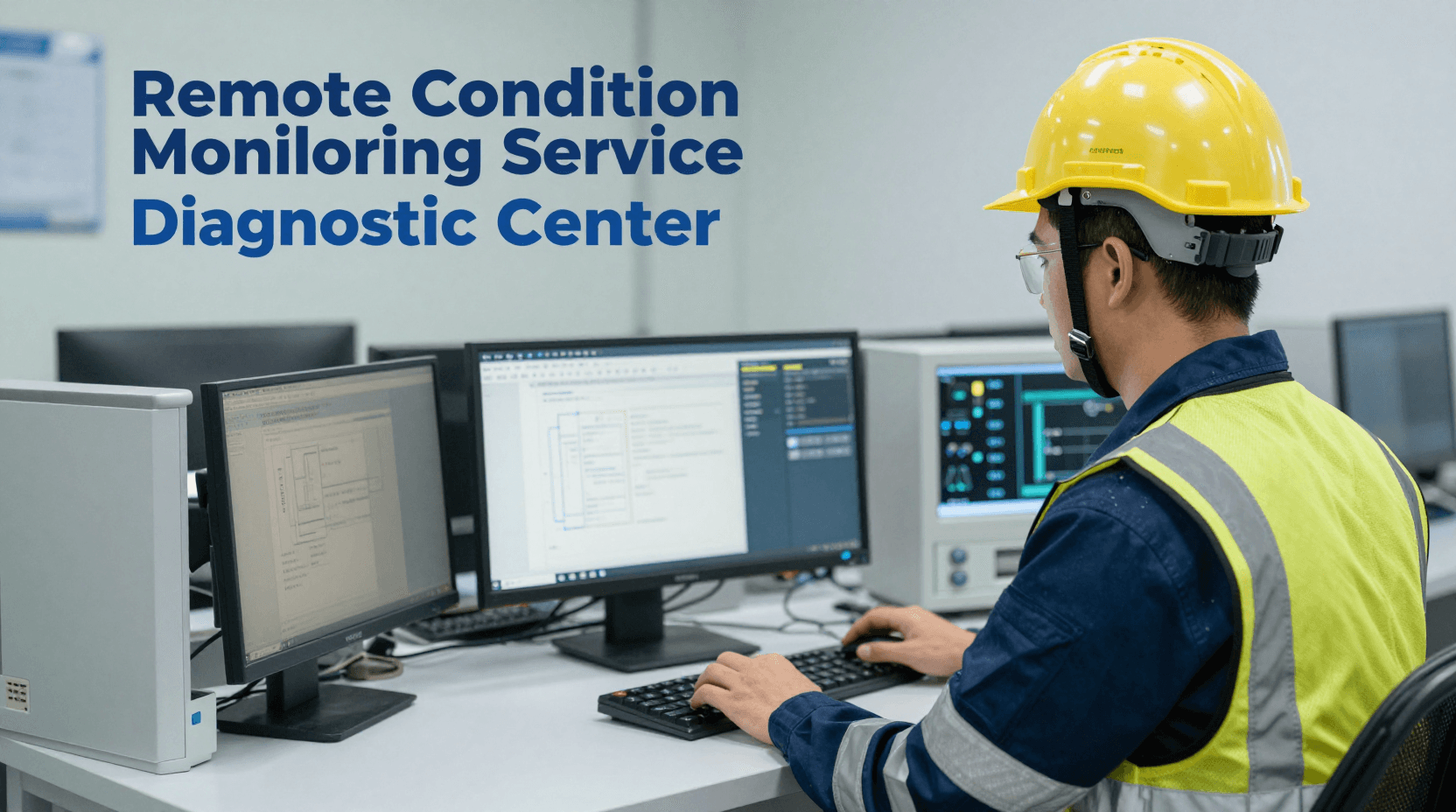
For the most critical gearboxes, we design and implement online continuous monitoring systems with permanent accelerometers, data acquisition hardware, and analysis software. These systems provide 24/7 surveillance with automatic alarms and trend analysis. Our condition monitoring services and predictive maintenance programs have helped Indonesian plants transition from reactive gearbox replacement to planned maintenance, dramatically reducing the frequency and severity of gearbox-related outages.
FAQ: Gearbox Condition Monitoring in Indonesia
How early can vibration analysis detect a developing gear fault?
With regular periodic measurements and proper baseline data, vibration analysis can typically detect developing gear surface distress 4-12 weeks before it progresses to a failure requiring emergency repair. For gear tooth fatigue cracks — which develop sub-surface and progress more rapidly — the detection window may be shorter, which is why online continuous monitoring is recommended for the most critical gearboxes.
What measurement points are needed for effective gearbox vibration monitoring?
Accelerometers should be mounted on the gearbox housing as close as possible to each bearing location, in both radial and axial directions. For a two-stage gearbox with four bearing positions, a minimum of 4-8 measurement points are needed. Measurements should be taken at consistent locations and orientations to enable reliable trend comparison over time.
How do I choose between periodic and continuous gearbox monitoring?
The choice depends on asset criticality, failure consequence, and fault development speed. For gearboxes where failure would cause extended production shutdown or safety events, continuous online monitoring provides the shortest detection-to-action window and is strongly recommended. For important but non-critical gearboxes, monthly periodic measurements by a qualified analyst provide a cost-effective monitoring program. Tiaravib can help you assess criticality and design the right monitoring strategy for your specific gearbox population.